
Deduct your rental building over the years it really has left.
German landlords write off the building, never the land, over 50 years by default. Many older buildings have far fewer years left. A certified valuer's report can prove it, and with that proof you deduct faster and pay less tax sooner.
For landlords in Germany and owners abroad. In English, with German welcome. Our fee: €654.50 to €2,017.05 incl. VAT.
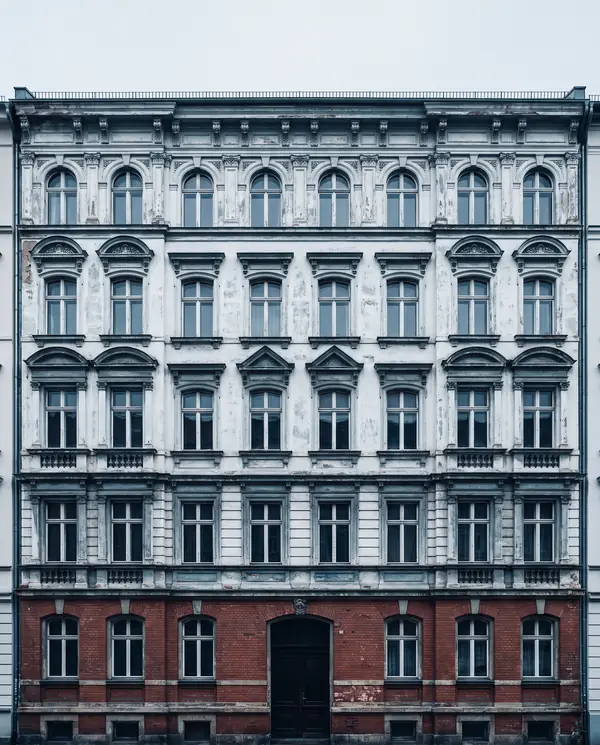
Default: 2% a year for 50 years
With a report proving 25 years: 4% a year
The rule in plain words
- The write-off AfA
- Each year you deduct a slice of the building's cost from your rental income. Germans call this slice AfA, the yearly write-off for wear and tear. The land is never written off.
- The remaining life Restnutzungsdauer
- The tax office, the Finanzamt, assumes a home lasts 50 years (40 years if built before 1925). The law lets you use a shorter remaining life, the Restnutzungsdauer, if you prove it.
- The proof Gutachten
- The proof is an expert report, a Gutachten, written and signed by a certified valuer for your specific building. You file it with your tax return.
What could a report be worth to you?
A rough estimate for your building. It runs in your browser and nothing you type leaves this page.
A report looks worth checking.
- Building value used
- €182,000
- Indicative remaining life
- 25 years
- Default yearly write-off 2% a year, 50 years
- €3,640
- Possible yearly write-off over 25 years
- €7,280
- Extra write-off each year
- €3,640
- Illustrative first-year tax saving at a 40% tax rate
- €1,456
- Over the next 25 years extra tax relief at the same rate
- €36,400
- Our fee capped for under 300 m²
- €952.00€800 net
- Your first-year gain after our fee
- €504
The total you write off over the building's life stays the same. The gain is getting it sooner, which means less tax in the early years. The saving figures are illustrations at the tax rate you chose. Your own saving depends on your tax position, which we do not review. Please check with your tax adviser (Steuerberater).
Our fee, in full
One rule, a minimum and a maximum. Everything below includes the inspection and the English summary.
32% of the extra write-off your report produces in the first year.
Lower caps for smaller buildings
Your fee never exceeds the cap for your building's floor area.
| Floor area | Cap incl. VAT | Net |
|---|---|---|
| Up to 299 m² | €952.00 | €800 |
| 300 to 500 m² | €1,184.05 | €995 |
| 501 to 1,000 m² | €1,541.05 | €1,295 |
| 1,001 m² and above | €2,017.05 | €1,695 |
The refund
If the tax office finally rejects the shorter life after an objection, we refund our fee in full. This applies to a final rejection within 24 months of delivery.
What is included
- The valuer's signed report for the tax office
- A video walk-through of your building with the valuer's team
- An English summary of the report
- Support in English
- No extras added later
Four worked examples
| Building (value without land) | Life the report proves | Extra first-year write-off | 32% of it | Fee incl. VAT | Net |
|---|---|---|---|---|---|
| Small flat, €100,000, 45 m² | 35 years | €857 | €274 | €654.50 | €550 minimum |
| Small flat, €100,000, 45 m² | 25 years | €2,000 | €640 | €761.60 | €640 |
| Flat, €200,000, 75 m² | 25 years | €4,000 | €1,280 | €952.00 | €800 cap for its size |
| Block, €2,000,000, 1,700 m² | 20 years | €60,000 | €19,200 | €2,017.05 | €1,695 maximum |
At an assumed 40% tax rate, 32% of the extra write-off equals 80% of your first-year saving. Your own saving depends on your tax position, which we do not review. Please check with your tax adviser (Steuerberater).
How this compares
| Faster Depreciation | Typical market prices | |
|---|---|---|
| A flat (under 300 m²) | €654.50 to €952.00 incl. VAT | About €700 to €1,800 incl. VAT |
| The largest buildings | At most €2,017.05 incl. VAT | Up to about €2,600 incl. VAT |
| Video inspection | Included | Sometimes included, sometimes extra |
| English summary of the report | Included | Rarely offered |
| Ordering and support in English | Yes | Mostly German only |
| Refund on final rejection | Full fee, within 24 months | Common |
Market figures are typical published prices for remaining-life reports in Germany, September 2026, including VAT.
How it works
Five steps from the first check to your tax return.
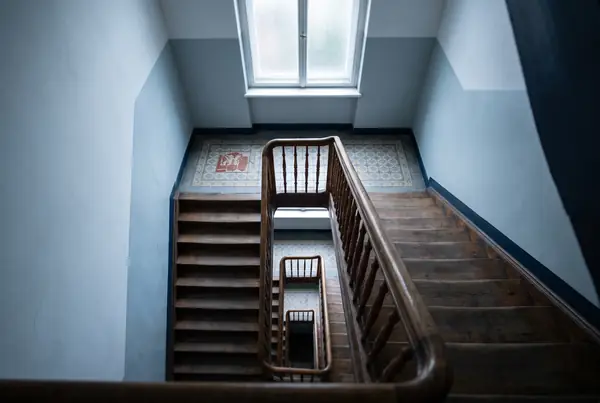 Stairs and floors
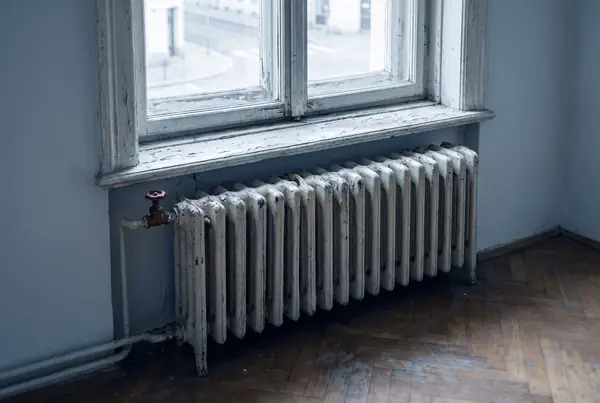 Heating and windows
-
Check your building online
Use the calculator above. If a report would not pay for itself, it tells you so.
-
Upload your documents
Your purchase contract, floor plans, photos and any records of modernisation work.
-
Video walk-through
You, a tenant or your property manager walk through the building on a video call, at a time that suits you.
-
A certified valuer writes and signs the report
The report is in German, the language the tax office reads, with an English summary for you.
-
You file it with your tax return
You or your Steuerberater send it to the Finanzamt with your return. You pay our fee when the signed report arrives.
The valuer decides, and we cannot change it
The valuer fixes the remaining life independently, before any fee is calculated. Our system locks the figure the valuer signs, and nobody at Faster Depreciation can change it. The valuer never sees your fee and is paid the same flat amount whatever life the report finds.
Who it is for
Owners of older rental property in Germany who would rather deal with this in English.
- English-speaking landlords in Germany with one flat or a few.
- Owners living abroad who let a flat in Berlin, Leipzig or elsewhere and file a German return each year.
- Expats who bought to let and now pay German tax on the rent.
- International investors holding apartment blocks, where the yearly gain is largest.
- German-speaking owners are welcome too. Ask us in German and we answer in German.
It tends to pay most for buildings from before about 1980, with a high building share and an owner on a high tax rate. Newer buildings and city-centre flats where land is most of the price gain less.
Questions
Is this legal?
Yes. German tax law lets a landlord use a shorter remaining life when they can prove the building will last fewer years than the default. The federal tax court confirmed in 2021 and again in 2024 that any suitable expert method can prove it. The tax office then weighs the report on its merits, so it has to be specific to your building and well reasoned.
What if the tax office rejects it?
The tax office may ask questions about a report. The valuer answers questions about the report's content. If the tax office rejects the shorter life, you can file an objection (Einspruch) through your Steuerberater. If the rejection becomes final after that objection, within 24 months of delivery, we refund our fee in full.
Do I need a Steuerberater?
Yes, we recommend one. We do not give tax advice. We do not review your tax position, fill in your return or deal with the tax office for you. In Germany that work is reserved for licensed tax advisers. Your Steuerberater, or you, file the report with your return.
Can I claim for past years?
Often for tax years that are still open, for example a year you have not filed yet or one whose assessment can still be changed. A final assessment usually cannot be reopened just because you now have a report. Which of your years are still open is a question for your Steuerberater.
What documents do I need?
- The purchase contract, which shows the price and usually the split between land and building
- Floor plans and the floor area
- Recent photos, inside and out
- Records of modernisation work, such as invoices for windows, heating, roof or bathrooms
- The energy certificate, if you have one
We tell you exactly what is missing after you upload. The video walk-through covers the rest.
Who signs the report?
A freelance property valuer certified under the international standard for certifying people (DIN EN ISO/IEC 17024), with their own professional indemnity insurance and clients of their own. The valuer reviews the draft, can depart from it, sets the remaining life and signs the report. Their name and certification appear on it.
What about the law change being discussed in parliament in 2026?
The Annual Tax Act 2026 is going through parliament. One proposed amendment would add the words "at the time of its completion" to the rule, which would limit shorter lives to buildings designed to last only a short time. If that passes, older buildings would most likely lose this option, probably for purchases or tax years after the law is published.
Similar attempts to restrict the option failed in 2022, 2024 and 2025. Parliament votes in December 2026. Until then we take no orders and no money. If the change passes, we will not launch, we will tell everyone who reserved a place, and we will delete their details within 30 days.
What if my rental makes a loss?
Then a bigger write-off makes the loss bigger. Whether that saves tax this year depends on your other German income. Owners abroad with no other German income may save little or nothing in the first year, and the loss is usually carried forward to later years. Set the calculator's tax rate to your real situation, or to zero, and talk to your Steuerberater before you reserve.

Reserve my place
No order is placed and nothing is paid. We will email you when we launch, expected January 2027.
Launch depends on the federal parliament's December 2026 vote on the Annual Tax Act 2026. If the change described in the questions above passes, we will tell you that we are not launching and delete your details within 30 days.